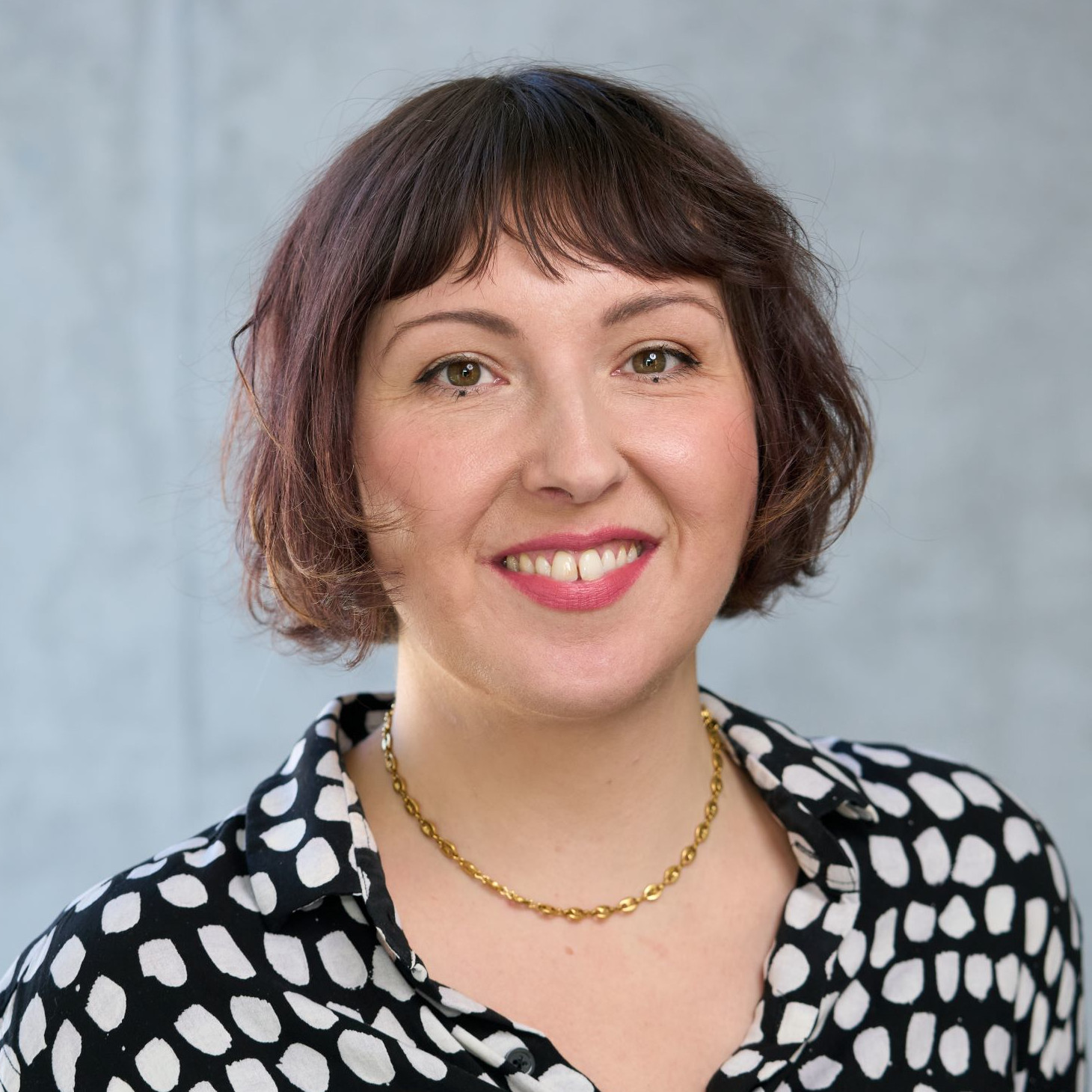
How did I get here?
I’ve been interested in speech for about as long as I can remember, partly due to being the elder sibling of a person who had a speech impairment in childhood. My brother’s one of the best, funniest, kindest people I know and I owe him a lot more than just my chosen career, but it is one of the earliest gifts he gave me; it simply meant I noticed that speech is variable, and I also noticed how some things could be more difficult or how sometimes people would treat him differently or make incorrect judgments about him based on his speech. I was also lucky enough to be around a few different languages, growing up in London, and certainly a few different Englishes at home, with heritage Yiddish and Yiddish-influenced London English on one side of my family and Welsh English speakers on the other. So I was always interested in and reasonably adept (by L1 English speaker standards, anyway) at languages, taking French, German, and Japanese at school. It made sense then to study Linguistics as an undergraduate (although I don’t think I had any idea what I was going to do with it, I wasn’t exactly career-oriented as a teenager). I went to Edinburgh where, among other things, I was lucky enough to be taught by Simon Kirby - both during my MA and later MSc - and experience his brilliant, inspiring passion for the study of language evolution. The focus on communication and cultural transmission really appealed to me, and I loved the idea of getting at the fundamentally quite simple underlying mechanisms that might explain how our brains manage to acquire and culturally transmit language. For my Honours dissertation I explored one aspect of this, overextension, in the literature on child development and in an iterative learning model made by my supervisor Paul Vogt.
While I loved studying Linguistics, I didn’t think that I could use it to pay the rent, and so after I graduated I stayed in beautiful Edinburgh and worked at various places, some more interesting than others. I had four jobs in about five years: some of the things I did at work in that time included photographing cheese, photographing tartan, photographing children’s book authors, along with a whole lot of updating spreadsheets, websites, answering phones and other admin-type tasks. I made a lot of friends along the way too, including the person who helped me learn to ride a bike, on the Meadows, aged 24! Eventually I went to work in events and communications at Stonewall Scotland, the national LGBT charity, and also took on some voluntary work with children whose families had been affected by HIV or Hepatitis C. This was hard work, and there are many valid critiques to be made of charity infrastructure and a focus on inclusion over liberation - but overall it was a pretty good fit for a person who has always cared strongly about fairness and social justice. Unfortunately, the recession at the end of the 00s hit the third sector hard, and I was made redundant in 2012, like many others - a rough time to be job hunting. I applied to everything I could find, including QA testing at the renowned video game studio Rockstar North, which is where I ended up. I’d always been interested in games and storytelling, and some of my earliest video game memories were of playing Lemmings (made by Rockstar’s predecessor, Dundee-based DMA) on my mum’s Macintosh computer. I never actually had a games console until I moved in with my partner while at university; it was a Nintendo Gamecube if you’re wondering, and there’s a possibility that I’d have been in the running for a first-class Honours degree instead of a 2.i if I hadn’t discovered The Legend Of Zelda. Anyway, back to Rockstar: I stayed in QA, on a string of temporary contracts, for more than two years, through the launch of GTA V; after that I worked briefly with the audio and dialogue teams, then joined the department responsible for in-game 2D artwork, graphic design and documents, user interface (UI) design and legal rights clearances.
In the end, I stayed at Rockstar for almost a decade. This meant that I saw a great project, Red Dead Redemption 2, through from start to finish, got to work collaboratively with thousands of people at studios across the world - many of them wonderful, smart and very talented - saw the incredible amount of human effort and attention to detail that goes into a game like this, and to witness people delighting in the world we’d made. I’m still genuinely proud of that and I love to hear about how much people enjoy the game. But it also meant I experienced life as a woman in the games industry during ‘Gamergate’ (side note: I’m still not too sure what my gender identity is internally, but that’s definitely how I’ve been gendered), and weathered several media storms when reports of our absurd ‘crunch time’ working conditions and staggering gender pay gap made it out of the culture of oppressive secrecy and competitiveness. I’m proud to say I also played a minor part in helping to establish a union branch in our workplace for the first time. Power to the IWGB game workers!
By 2020 I’d had quite enough of all that and started looking at how I could change the course of my career and, not to be too dramatic, life. I was interested in training as a speech and language therapist, but I had a lot of questions about the theory and practice, as well as financial concerns. While it was obviously horrible, working from home during the COVID-19 lockdowns meant I saved quite a bit of money because I couldn’t spend it on what I usually did - travel and tattoos - and had more time to think. One thing I’d always enjoyed about any job I’d had was research - going on deep dives to find out what something was really like, and the reasons why, and simply learning for the sake of it. So the idea of going back to university was really appealing, and I was fortunate enough to be able to do that in 2021. Working on my MSc in Developmental Linguistics, I took an interest in the idea of speech technology in language acquisition and development: the youngest generation being born from the 2010s on are the first to be native to a world with new speech contexts, where in certain cases, they can speak to something that obviously isn’t human (a phone, device, smart speaker, or robot) and expect it to ‘hear’ and answer in natural language. I was incredibly lucky once again to meet Dr. Catherine Lai and work with her on my MSc dissertation, and later, PhD. Several existential crises later, I’m having the time of my life working with absolutely brilliant colleagues on speech technology in society.
Okay, this is long. If you’re still reading, you can just ask me about anything else you’re wondering!